Case Studies Book a 30-minute discovery call
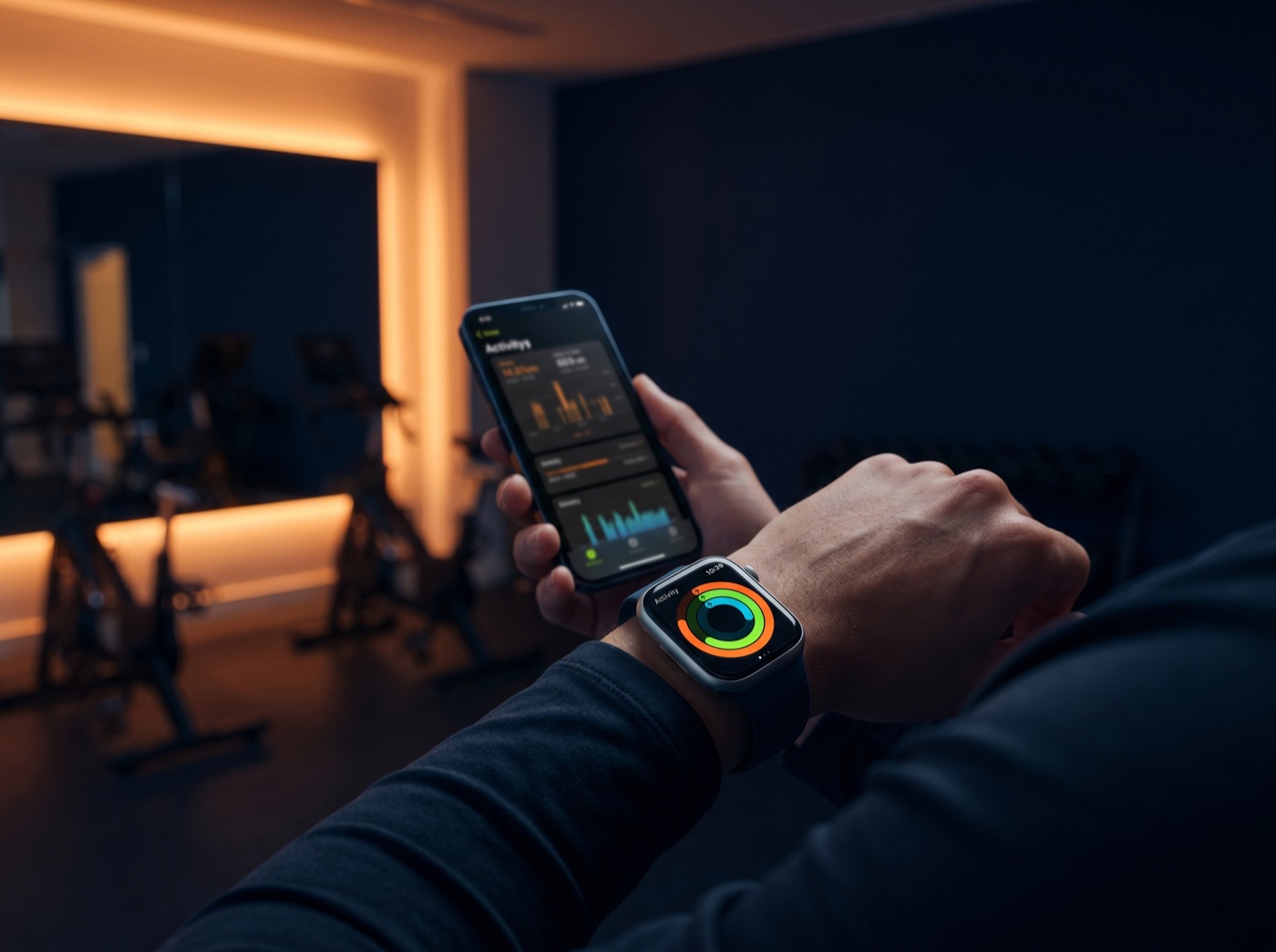
A runner checking workout and heart-rate data on a smartwatch synced to a fitness app on their phone
Industries / Fitness apps

The fitness app development company that builds wearable-tight, compliance-ready apps.

Resourcifi is a fitness app development company building workout, training, nutrition, and coaching apps that sync cleanly with wearables and the platform health stores, and that are designed to the health-data rules from the first sprint. We engineer tight integrations with Apple HealthKit and Android Health Connect, build retention in from the first sprint, and treat the 2024 FTC Health Breach Notification Rule as a genuine engineering requirement.

4.9 on Clutch600+ projects200+ in-house experts95% repeat clients
Trusted by
Stanford DOW Snak King Narda Proximity Learning
4.9 on Clutch
Core features we engineer

The fitness features we build, end to end.

01 · Onboarding, goals and profile

Onboarding that turns a download into a goal.

The first session decides retention, so onboarding captures a goal without friction.

  • Social and biometric login
  • Goal setup and baseline on first run
  • Personalized home from session one
  • Health-store permission in context
Swift and KotlinReact NativeOAuth and biometrics
Mobile app development
02 · Activity, workout and wearable tracking

Tracking that reads the wearable so the user does not have to.

In-session logging loses most apps, so we pull the data straight from the wrist.

  • Sets, reps, distance, and heart rate
  • Two-way HealthKit and Health Connect sync
  • Fitbit, Garmin, WHOOP, and Oura
  • WatchOS and Wear OS companion apps
HealthKitHealth ConnectWatchOS and Wear OSTime-series store
Mobile app development
03 · Guided plans, nutrition and content

Plans and nutrition that move together.

Programs, nutrition, and content sit on one model, so they inform each other.

  • Video and audio guided programs
  • Calorie and macro logging with barcode scan
  • Food database and nutrient breakdowns
  • Content CMS for rotating plans
Node and PythonREST and GraphQLCMSMux and HLS
Web development
04 · AI coaching, real-time and social

AI coaching and live experiences that keep people coming back.

Adaptive plans, real-time feedback, and social mechanics are the retention engine.

  • Adaptive workout and nutrition plans
  • Computer-vision form correction
  • Live and on-demand classes
  • Leaderboards, streaks, and challenges
WebRTC and WebSocketsOn-device MLAgora and MuxEval gates
AI application development
05 · Subscriptions, billing and trainer tools

Subscriptions and trainer tools that protect the revenue.

Subscriptions fund the app, so billing and trainer tooling have to be right.

  • Apple and Google in-app billing
  • Stripe for goods and coaching
  • Entitlement and renewal logic
  • Trainer scheduling and client tools
StoreKitGoogle Play BillingStripeEntitlements
Mobile app development
What good looks like

What a serious fitness app development partner actually delivers.

Most fitness apps do not lose on feature count, they lose on wearable integration and retention. A serious partner gets the health-data plumbing right first: two-way sync with Apple HealthKit and Android Health Connect, with parity in mind, because the two platforms model permissions and data types differently and a feature that reads heart rate on iOS does not automatically read it the same way on Android. This matters more in 2026 because Google Fit developer APIs are deprecated and supported only through the end of the year, so any new Android build targets Health Connect from day one. The second thing a serious partner gets right is the rule that catches most teams off guard: the amended 2024 FTC Health Breach Notification Rule. Many pages still say fitness apps are unregulated, but an app that pulls identifiable health data from a user and a tracker is treated as a personal health record vendor, and an unauthorized disclosure or sale of that data now counts as a reportable breach, with the FTC having enforced against health apps already. Then comes the part that decides whether the product survives: retention engineering. Streaks, adaptive plans, progress analytics, and well-timed notifications are designed as part of the architecture, with daily-active and one-month-retention targets set up front, so the app earns the subscription that funds it.

A close-up of a fitness app screen showing workout history, heart-rate trends, and recovery metrics
Fitness app development services

Every kind of fitness app we build, from one accountable team.

01

Activity and workout tracking apps

Logs sets, reps, distance, steps, and heart rate, auto-syncing from wearables.

Mobile app development →
02

Guided training and on-demand classes

Live and on-demand video classes with leaderboards and group challenges.

Mobile app development →
03

Nutrition and wellness apps

Calorie and macro logging with barcode scanning, joined to workout and sleep data.

Mobile app development →
04

Coaching and personal-trainer platforms

Trainer scheduling, client messaging, and a plan CMS beside the member app.

Web development →
05

Wearable and health-data integration

Two-way sync with HealthKit, Health Connect, Fitbit, Garmin, WHOOP, and Oura.

Mobile app development →
06

AI coaching and adaptive plans

Adaptive plans and computer-vision form correction from each user's data.

AI application development →
Compliance and platform readiness

Built to the health-data rules from day one.

Fitness apps touch health data, app-store billing, and platform health stores, so the rules are part of the build from the first sprint, never a checklist at the end.

US // breach rule

FTC Health Breach Notification Rule

Amended 2024: health-data apps must notify users and the FTC within 60 days of a breach, including any unauthorized sale.

How we build to it

Amended in 2024: an app that draws identifiable health data from a user and a tracker is a personal health record vendor and must notify users, and the FTC, within 60 days of a breach, where a breach now includes unauthorized disclosure or sale of health data.

How we build to it: data inventory, breach-detection and notification workflows, and a hard rule against selling or repurposing health data, set up before launch.

EU // consent

GDPR Article 9

Fitness and wearable data is special-category, so EU users need explicit, separate consent and a lawful basis.

How we build to it

Fitness and wearable health data is special-category data, so EU users need explicit, separate consent, distinct from the general terms of service, plus a valid lawful basis for processing it.

How we build to it: a separate, revocable health-data consent step, purpose-scoped storage, and consent records the app can prove later.

iOS // app store

Apple App Store 5.1.3

HealthKit data may not be used for advertising or sold, and needs per-type user authorization.

How we build to it

HealthKit and related health data may not be used for advertising, marketing, or data-mining, nor sold to third parties, and the app needs a privacy policy plus per-type user authorization.

How we build to it: per-type HealthKit authorization requested in context, health data walled off from any ad or analytics path, and review-ready privacy disclosures.

android // health store

Android Health Connect

The unified Android health permission model; Google Fit developer APIs are deprecated through end of 2026.

How we build to it

Health Connect is the unified Android health permission model with on-device storage. Google Fit developer APIs are deprecated and supported only through the end of 2026, so new apps must build on Health Connect.

How we build to it: new Android builds on Health Connect from the start, and a clear migration path for any app still sitting on the deprecated Google Fit APIs.

US // PHI only

HIPAA

Applies only when the app handles PHI for a covered entity, not to consumer fitness apps.

How we build to it

HIPAA generally does not apply to consumer fitness apps. It applies only when the app handles protected health information for a covered entity, such as a provider, payer, or clinical or employer wellness program.

How we build to it: we scope whether HIPAA is in play first, and when it is, we engineer to it with access controls, audit logging, and a business associate agreement.

payments // cards

PCI DSS

Required when the app takes card payments outside the Apple and Google app-store billing systems.

How we build to it

Required when the app takes card payments directly for physical goods or coaching, outside the Apple and Google app-store billing systems.

How we build to it: card data tokenized through a compliant processor so it never touches your servers, keeping the PCI scope as small as possible.

We engineer to each of these. We do not claim certification on your behalf.

For context on the opportunity: the global fitness app market was estimated at about USD 12.12 billion in 2025 and is projected to reach roughly USD 33.58 billion by 2033, a 13.40% CAGR, per Grand View Research.

The standard we hold

A fitness app lives or dies on wearable integration and retention, and both are decided in the architecture long before the first user opens it.

How we work

From discovery to a production-ready fitness app in six steps.

The Resourcifi mobile engineering team working through a fitness app build on a whiteboard and devices
01

Discovery and compliance scoping

We map your app type, target wearables, monetization model, and the markets you ship to, then scope which rules actually apply, the FTC Health Breach Notification Rule, GDPR Article 9, and whether HIPAA is in play, with a line-by-line estimate before you commit.

02

Architecture and health-store design

We design the data model, the two-way Apple HealthKit and Android Health Connect sync, and the permission and consent flows up front, planning for parity between the two platforms and a clean path off the deprecated Google Fit APIs.

03

Design and in-session UX

Onboarding, the home dashboard, and the in-session tracking screens are designed for low friction and WCAG accessibility, so logging a workout stays fast and the retention mechanics are woven into the experience from the start.

04

Build and wearable integration

The app, backend, and integrations ship in milestones, with wearable sync, live-class and real-time infrastructure, subscriptions, and the trainer tooling wired in, tested against real devices and real heart-rate and activity streams.

05

Eval, QA and accessibility

Any AI coaching or form-correction feature passes an evaluation gate before it reaches a user, and the app goes through multi-device QA and accessibility review so it behaves the same across phones, watches, and screen readers.

06

Launch, retention and iterate

App-store submission, analytics, and crash monitoring wired before go-live, then a release cadence tied to daily-active and one-month-retention targets so the app keeps improving the numbers that fund the subscription after launch.

The stack we build on

A fitness stack chosen for wearables, real time, and scale.

Mobile

Native and cross-platform

Native iOS in Swift and SwiftUI and native Android in Kotlin for sensor-heavy, wearable-tight builds, or React Native, Flutter, and Kotlin Multiplatform to cut time-to-market, with WatchOS and Wear OS companion apps.

Swift, Kotlin, React Native, Flutter →
Health

Health stores and wearables

Apple HealthKit with per-type read and write authorization, Android Health Connect as the path off deprecated Google Fit, plus Fitbit, Garmin, WHOOP, Oura, Samsung Health, Strava, and continuous glucose monitors.

HealthKit, Health Connect, Fitbit, Garmin →
Backend

Backend and real time

Backend in Node.js, Python, or .NET with REST and GraphQL APIs, PostgreSQL or MySQL plus time-series and NoSQL stores for high-frequency sensor data, on AWS, GCP, or Azure with autoscaling, and WebSockets and WebRTC for live classes and leaderboards.

Node, Python, Postgres, WebRTC →
Payments

Payments and analytics

Apple In-App Purchase and Google Play Billing for subscriptions, Stripe for cards on physical goods and coaching, Twilio for messaging, Spotify and Apple Music for audio, and Crashlytics, Sentry, and product analytics for monitoring.

StoreKit, Play Billing, Stripe, Sentry →
Why fitness teams pick Resourcifi

Why founders choose Resourcifi as their fitness app development company.

0
Founded, US incorporated
0+
In-house experts
0+
Projects shipped
0%
Repeat clients
0
on Clutch
A fitness app shown on a phone and a paired smartwatch, with workout, nutrition, and recovery views
How we prove it

Firm-level proof, and honest about the rest.

We have not published a named fitness app case study, so we will not invent one. What we can stand behind is the record: 200+ in-house experts covering native iOS and Android, React Native, and Flutter, 600+ projects delivered since 2017, a 95% repeat-client rate, and a 90-day median to a working build. That spans health and wellness app experience and the mobile, wearable, and real-time work a fitness product needs. The pattern holds across engagements: we scope the platform fit, the compliance surface, and the integration map first, deliver milestones you can see working, and build with the wearable depth and consent controls that hold up in review. We do not publish client numbers we cannot verify, so the metrics stay with the brands that earned them.

200+senior in-house experts
95%repeat clients across engagements
4.9on Clutch
Fitness app questions

Fitness app development, answered.

The questions fitness founders ask us on the first scoping call, answered straight.

How do you handle wearable and health-store integration?

We treat the health store as the foundation and design it in early. We build two-way sync with Apple HealthKit and Android Health Connect, designing for parity in mind because the two platforms model permissions and data types differently, so a feature that reads heart rate on iOS needs its own handling on Android. On top of that we integrate the trackers your users actually wear: Fitbit, Garmin, WHOOP, Oura, Samsung Health, Strava, and continuous glucose monitors, plus WatchOS and Wear OS companion apps for on-wrist tracking. We also plan the migration off Google Fit, since its developer APIs are deprecated and supported only through the end of 2026, so a new Android app lives on Health Connect from the start.

Is my fitness app actually regulated, and what about the FTC rule?

Most pages still say fitness apps are unregulated, and that is wrong. Under the FTC Health Breach Notification Rule, amended in 2024, an app that draws identifiable health information from a user and a tracker is treated as a personal health record vendor and must notify users, and the FTC, within 60 days of a breach, where a breach now includes the unauthorized disclosure or sale of health data, not just a hack. The FTC has already enforced against health apps over this. Separately, GDPR Article 9 treats fitness data as special-category data that needs explicit, separate consent for EU users, and Apple and Google both bar using health-store data for advertising. HIPAA usually does not apply to a consumer app, only when you handle protected health information for a covered entity such as a provider, payer, or clinical or employer wellness program. We scope which of these apply to your app first and build to them from day one.

What does fitness app development cost, and how long does it take?

It depends on the app type, the wearables you support, and the compliance surface, so we give a defensible estimate after a discovery phase. As representative ranges, a focused MVP, meaning onboarding, core tracking, one or two wearable integrations, and basic plans, is typically a smaller, faster build, while an AI-powered full build with adaptive coaching, live classes, real-time leaderboards, and trainer tooling is a larger one. Our median to a working build is 90 days, which helps founders racing a seasonal launch window. On cost, Resourcifi's global delivery model typically lands about 70% below comparable onshore US agency rates, and you get senior, in-house engineers named in writing before you sign, not a rotating freelancer bench. These ranges are representative; the real number comes out of scoping your features.

How do you engineer retention so the app keeps its subscribers?

We treat retention as a service line of its own, with measurable targets rather than a list of features. Subscriptions are the dominant fitness model, so the app has to earn the renewal. We set daily-active and one-month-retention targets up front, then build the mechanics that move them: streaks, badges, challenges, and squads for habit and social pull, adaptive plans and progress analytics so the app keeps feeling personal, and well-timed push notifications with quick actions rather than noise. The wearable sync matters here too, because an app that logs a workout automatically from the wrist removes the friction that causes people to drop off. We instrument the funnel from first session through renewal so we can see churn falling instead of guessing at it.

Should we build for Apple HealthKit, Android Health Connect, or both?

If you are targeting both platforms, you build for both, and the work is not symmetric. Apple HealthKit sandboxes health data on-device with separate read and write authorization for each data type, which the user can grant or revoke, so the app must request and respect granular permissions. Android Health Connect is the unified Android health permission model, also storing data on-device, and it is now the required path because Google Fit developer APIs are deprecated and supported only through the end of 2026. We design the data model so the two map to a common internal shape with parity in mind, request permissions in context, and respect revocation on both, so the same feature behaves consistently whether the user is on iOS or Android.

Can you build AI form correction and adaptive coaching?

Yes, and we are specific about the trade-offs. Computer-vision form correction can run on-device for low latency and privacy, or in the cloud where you need heavier models, and we choose per feature based on accuracy needs, device capability, and cost. Adaptive coaching, meaning workout and nutrition recommendations that adjust to the user's behavior and biofeedback, is built on clean health and activity data with an evaluation gate before it reaches a user. One hard constraint shapes the design: Apple and Google both bar using health-store data for advertising or data-mining, so any AI feature is walled off from ad and marketing paths. We build the data layer and the eval gate first, so the coaching trains on real signal and the quality is measured before launch.

More app specialties
Education apps Dating apps Social media apps Mobile games Casino games
Ready when you are

Build your fitness app with a team that ships.

Book a free fitness app consultationSee the method