Which social channels do you run?
We run Meta (Instagram and Facebook), TikTok, LinkedIn, X, YouTube Shorts, Pinterest, Reddit, and Threads. Channel selection follows where your buyers convert rather than whatever is trending that week. A B2B SaaS program might put most of its paid budget on LinkedIn; a DTC apparel brand might split Meta and TikTok. We document the rationale up front so the mix is defensible, then revisit it against the numbers each quarter. Organic, paid, community, and creator work all sit under one team, which is the difference between a managed partner and a channel reseller. See how social fits the wider program at /services/.
How do you keep AI-assisted content from sounding like a chatbot?
Every model output passes brand-voice evals before it reaches a draft a human sees. The eval set uses 50 to 150 of your real human-written posts as the reference, an adversarial set of common AI-tone failure modes (over-formal openers, generic CTAs, vague metaphors), and a regression set seeded with anything that slipped through and a human later caught. Drafts that fail route back for re-prompting, and nothing publishes straight from a model. This guardrails discipline is part of our Production-First AI approach at /our-method/, where evals are first-class rather than an afterthought bolted on at the end.
What is an autonomy budget and why does it matter?
For any automated agent, such as a DM auto-responder, a comment-triage bot, or an inbox router, we cap three things: tool calls (how many actions before it checks in), dollars (model and tool spend per session), and seconds (wall-clock time before it must escalate). When the agent hits any cap, it pauses and hands off to a named human. These caps ship useful automation without a 3 a.m. surprise where a bot loops, overspends, or posts something off-brand. Caps are set during scoping and tuned as you build trust in each workflow. It is how we make autonomy safe to deploy.
How do you measure social ROI when attribution is broken?
We build a measurement scorecard in the first two weeks with primary KPIs (qualified pipeline, revenue, retention) and intermediate KPIs (share-of-voice, sentiment delta, engagement-to-DM rate, branded-search lift). We wire GA4 server-side, conversion APIs for paid, and marketing mix modeling where spend is large enough to support it. We report what we believe and flag what we do not, with no last-click theater. For deeper funnel attribution across channels, this connects to /services/digital-marketing/, and paid measurement is coordinated with /services/ppc-management/ so social and search are read on the same scorecard.
Do you handle crisis and community response?
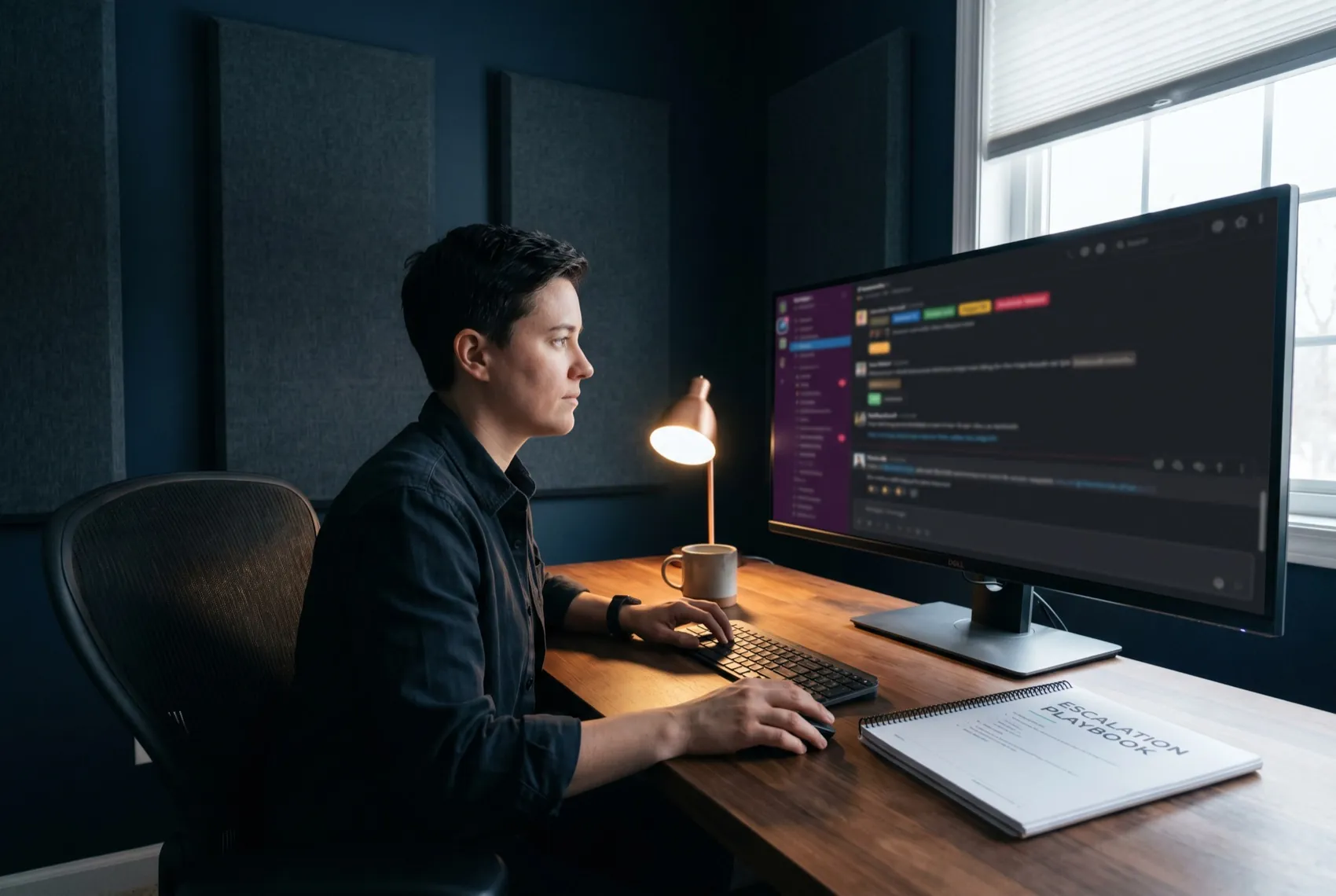
Yes. Crisis escalation paths get documented before launch: what triggers a hold on scheduled posts, who approves a public statement, what gets posted publicly versus answered in DM, and which named human signs off. We do not auto-respond on crisis-tagged content, because a human-in-the-loop approval step is mandatory there with no exceptions. Day-to-day community management runs on documented response targets by tier (priority customer, public complaint, general inquiry) with inbox and comment monitoring. The standing playbook means your team is not improvising tone or ownership in the middle of a bad afternoon. You can scope this as community-only on top of an in-house content team if that fits.
How do you vet influencers and stay FTC-compliant in 2026?
We run engagement-rate sanity checks against follower count, audience-geography overlap with your buyer base, a brand-safety review of recent posts, and rate benchmarking through tools like Aspire, Grin, CreatorIQ, and Later Influence. On disclosure, 2026 enforcement reality matters: an Instagram paid-partnership tag alone is not enough, so an Ad or Sponsored label leads the caption and stays obvious to an average viewer in Reels and lives. We favor long-term ambassadors over one-off posts when the math supports it, because repeat creators compound trust and lower per-post cost over time. Sourcing, contracting, briefs, content review, and post-campaign attribution all sit inside one managed process.
Can you integrate social commerce with our Shopify store?
Yes. We set up Instagram Shopping, TikTok Shop, and Meta Shops product feeds from Shopify, build shoppable Reels, produce live-shopping events, run TikTok Shop affiliate as a creator-commerce lane, and model checkout-on-platform versus redirect economics per SKU margin so you sell on the surface where the margin holds. We reconcile against your order ledger nightly so platform-side attribution does not drift from revenue truth, which keeps reporting honest when a channel over-claims credit. The goal is a commerce setup that moves product and reconciles cleanly under scrutiny rather than a vanity storefront that looks active yet never reconciles against real orders.
What is the difference between organic and paid social, and do I need both?
Organic builds brand, voice, and durable audience through editorial calendars and native content across Reels, TikTok, Shorts, carousels, and long-form video, plus creator-team operations. Paid social buys reach and conversions on Meta, TikTok, LinkedIn, X, Reddit, and Pinterest with creative-testing matrices, conversion-API setup, and mix-aware spend allocation. Most programs need both: organic proves what messaging resonates, and paid scales the winners with budget behind them. Running them as one team means creative learnings move between them instead of living in silos. Paid social is coordinated with search through /services/ppc-management/ so the full acquisition picture is read together rather than channel by channel.
How often will we get reports, and what is in them?
You get a weekly numbers review against the measurement scorecard, plus an internal demo cadence during build so nothing is a surprise at month-end. Reports cover primary KPIs (pipeline, revenue, retention) and intermediate signals (share-of-voice, sentiment, engagement-to-DM rate, branded-search lift), creative performance by channel, and paid-spend efficiency. We run a quarterly creator-roster review and a creative-refresh cadence per channel. Reporting pulls from native dashboards plus listening tools like Brandwatch, Meltwater, and Sprinklr, with GA4 server-side for attribution. Everything is framed so you can defend it in a board meeting rather than admire a vanity chart.
What does social media marketing cost?
Pricing depends on scope: how many channels, the balance of organic, paid, community, and creators, and whether you want an always-on retainer, a launch sprint, a community buildout, or an AI content pipeline. Most managed programs in the US run on a monthly retainer, with smaller scopes engaging as fixed-scope launch sprints or a community buildout. Because we staff in-house through a global delivery model rather than reselling freelancers, more of your budget goes to senior craft and production rather than agency overhead. You get a strategist, content producer, paid specialist, community manager, and creator lead as the scope requires, rather than a junior with a scheduling tool. We quote a concrete scope after a Discovery Call so the number reflects your actual program. Start at /contact/.
How does social media marketing fit your other marketing services?
Social is one channel inside a connected program. The content engine that feeds your feeds is shared with /services/content-marketing/, paid social is coordinated with search and display under /services/ppc-management/, and the whole acquisition picture rolls up through /services/digital-marketing/. Reading them on one scorecard is what stops channels from claiming the same conversion twice. We run all of it under the Production-First AI method at /our-method/, so AI-assisted work everywhere sits behind the same brand-voice and safety guardrails. You can engage social standalone or as part of the wider program. Browse the full lineup at /services/.