Case Studies Book a 30-minute discovery call
Hire ML engineers: a senior machine learning engineering team shipping production models with monitoring
Hire ML Engineers · Production-First AI™

Hire machine learning engineers who put models in production, not in notebooks.

Hire machine learning engineers from Resourcifi to own a prediction end to end: feature pipelines, training, a gated eval suite, serving with SLAs, drift monitoring, retrain triggers and the A/B harness that proves lift. You meet and interview the senior engineer before you sign, and we place a vetted ML developer through dedicated staff augmentation, matched from our 200+ in-house experts so a working engineer starts fast. Nothing ships unless it beats the right baseline on the same backtest window. This covers ranking, fraud, forecasting, classification, recommenders and the monitoring layer most ML hires skip. Per-engineer-per-month pricing is typically about 70% below comparable onshore rates.

 4.9 on Clutch 600+ projects shipped 200+ in-house experts 95% repeat clients
Stanford DOW Snak King Narda Proximity Learning Nextgen Living University of Guelph Lenze iAutomation Emory University IKEA
600+ projects 95% repeat clients 4.9 on Clutch
The discipline

An ML developer accountable to a backtest, not a demo.

Hiring an ML engineer is not about a notebook that scores well once. You want someone who owns the path from a model to a running system: feature pipelines with online and offline parity, training and a gated eval suite, the serving surface whether batch, online or streaming, drift monitoring, retrain triggers, and an A/B harness to prove the model moves the number you actually care about. Demand for this skill set keeps outrunning supply: the U.S. Bureau of Labor Statistics projects data scientist roles, the closest tracked category, to grow about 34% from 2024 to 2034, far faster than the average occupation (BLS Occupational Outlook Handbook, 2024-2034 projections). That scarcity is why most teams hire a vetted engineer rather than wait out a long in-house search.

Production ML staff augmentation only works when one engineer owns that whole chain. We staff from our own 200+ employed experts and vet for production ability over notebook experience. If you would rather hand off a full build than embed a hire, our machine learning development services deliver the same discipline as a managed engagement. The rule we hold every build to is plain: nothing ships unless it beats the right baseline on the same backtest window, and nothing ships if its lift cannot be measured in production. A gradient-boosted forecaster that loses to Prophet on the same horizon does not ship. A two-tower ranker that fails to beat a tuned LightGBM gets cut.

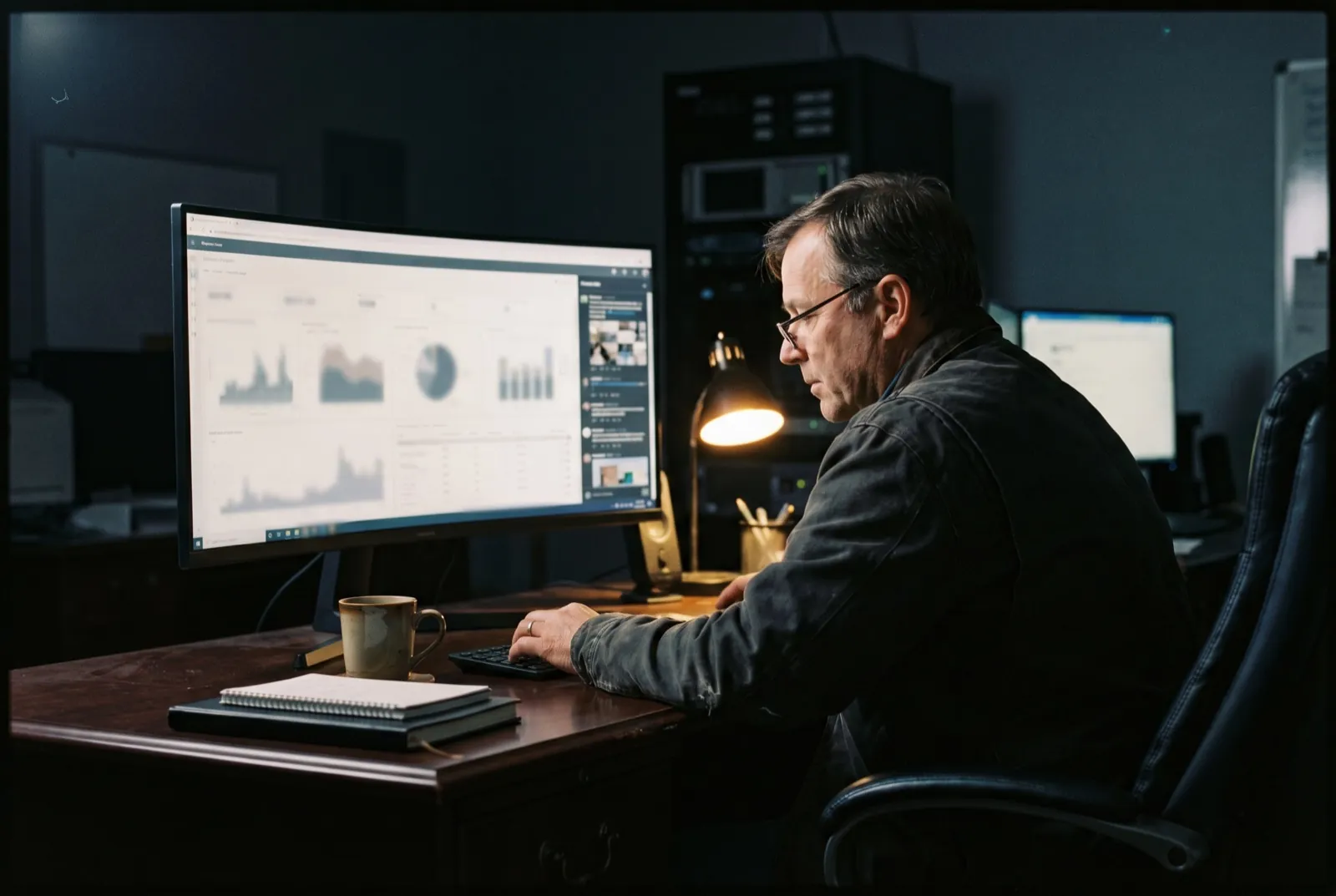
A dedicated ML engineer comparing a candidate model against a baseline on the same backtest window
What an ML engineer owns

Hire ML engineers for the full production loop.

Each engineer owns a layer of the system that turns features into a reliable prediction and keeps it honest, from the first baseline through monitored deploy. Move through the stages.

ML engineer building a learning-to-rank recommendation system at a workstation

Ranking and recommendation

They build search ranking, product recommendations, content feeds and lead scoring: pairwise and listwise learning-to-rank, two-tower retrieval, candidate generation plus re-ranking. An offline reference set comes first, then an online A/B test before full exposure, so a ranker proves its lift before it owns the page.

LightGBM · XGBoost · two-tower retrieval
ML engineer building a real-time fraud scoring model with SHAP attributions on the reviewer path

Fraud, risk and anomaly

They score transactions, account actions and claims in real time: gradient-boosted models for tabular signals, isolation forests and autoencoders for unsupervised anomaly, and ensembles tuned for heavily imbalanced classes. Where a human reviews the output, SHAP attributions surface in the reviewer UI so a flag is explainable, not a black box.

XGBoost · isolation forests · SHAP
Machine learning engineer building a demand forecasting model against classical baselines

Demand forecasting and time series

They forecast inventory, staffing, revenue and capacity: classical baselines like Prophet, ARIMA and exponential smoothing measured against gradient-boosted regression, temporal fusion transformers, and zero-shot foundation baselines like TimesFM and Chronos. The beat-the-baseline gate decides what ships, on the same horizon.

Prophet · Temporal Fusion Transformer · TimesFM
ML engineer training a calibrated classification model for ticket routing and churn

Classification and structured prediction

They build document classification, intent detection, image classification, ticket routing and churn models: scikit-learn for tabular work, PyTorch for vision and sequence problems, and fine-tuned Hugging Face encoder models for text. Calibration and the right error metric get chosen for the decision the model drives, not for a leaderboard.

scikit-learn · PyTorch · Hugging Face
MLOps engineer monitoring model drift and configuring retraining triggers

MLOps, monitoring and retraining

They stand up feature stores, experiment tracking, orchestration, drift monitoring, shadow deploy and canary release. Feature and prediction drift are watched continuously, and retraining is triggered by drift thresholds, performance decay on a rolling reference set, or a fixed cadence, whichever fires first. Every retrain runs the three-layer eval suite before promotion. No silent retrains.

Feast · MLflow · Evidently
ML engineer building an A/B experimentation harness to measure model lift in production

A/B testing and experimentation

They ship the experimentation harness with the model, not as a phase two that gets dropped when the timeline slips: variant assignment, exposure logging, metric joins, sequential testing and CUPED variance reduction. If you cannot measure a model's lift in production, it should not be in production.

exposure logging · sequential testing · CUPED
Where they have shipped

ML engineers who know your domain.

Not generalists guessing at your problem. Hire ML developers who have shipped ranking, fraud, forecasting and vision systems in the industries you compete in. Drag to browse.

Dedicated ML engineer, 160 hrs/monthML pod, 2 to 5 peopleMLOps build-outExperimentation engagementProduction RecoveryRanking and recsysFraud and anomalyBeat-the-baseline gate
Hire by specialization

Six ML specializations, hire the specialist.

Each ML engineer you hire goes deep on one problem family your build depends on, instead of spreading thin across all of it. Need an adjacent skill set? Browse the full hire developers hub or compare with our AI engineers and data scientists lanes.

A ranking and recommendation ML engineer available to hire
01 · Ranking and recommendation engineers

Pages and feeds that rank for the metric you care about.

Recsys specialists who build retrieval and ranking that lift the right number, with offline evaluation before any online exposure.

  • Learning-to-rank, pairwise and listwise
  • Two-tower retrieval and candidate generation
  • Re-ranking and feature engineering
  • Offline reference sets and NDCG evals
  • Online A/B before full exposure
  • Serving latency and cost tuning
LightGBMXGBoostPyTorchFeast
A fraud, risk and anomaly detection ML engineer available to hire
02 · Fraud, risk and anomaly engineers

Real-time scoring you can explain to a reviewer.

Hire fraud and anomaly engineers who score in real time and surface why, on imbalanced data where the cost of a miss is high.

  • Gradient-boosted tabular scoring
  • Isolation forests and autoencoders
  • Ensembles for imbalanced classes
  • SHAP attributions on the review path
  • Calibrated thresholds and precision tuning
  • Real-time serving and feature lookups
XGBoostCatBoostSHAPEvidently
A demand forecasting and time-series ML engineer available to hire
03 · Forecasting and time-series engineers

Forecasts that beat the baseline, on the same horizon.

Forecasting specialists who measure every model against a real comparator before it touches a planning decision.

  • Prophet, ARIMA and exponential smoothing
  • Gradient-boosted regression
  • Temporal fusion transformers
  • Foundation baselines: TimesFM, Chronos, Moirai
  • Backtest design and horizon selection
  • Seasonality and intermittent-demand handling
ProphetTimesFMChronos-2PyTorch
A computer vision and NLP ML engineer available to hire
04 · Computer vision and NLP engineers

Vision and text models in your product, fine-tuned.

Hire ML engineers who fine-tune and serve vision and text models, from detection and segmentation to document understanding.

  • Image classification and detection
  • Segmentation with YOLO and SAM 3
  • Fine-tuned encoder text models
  • OCR and document understanding
  • Data pipelines and labeling workflows
  • Inference optimization and quantization
PyTorchHugging FaceOpenCVONNX Runtime
An MLOps and ML platform engineer available to hire
05 · MLOps and platform engineers

Pipelines, serving and the runbooks after you leave.

MLOps engineers who install the platform: feature store, training pipelines, serving, drift monitoring and retrain triggers.

  • Feature stores with online and offline parity
  • Experiment tracking and model registry
  • Orchestration and scheduled training
  • Drift monitoring and alerting
  • Serving via FastAPI, BentoML, Triton
  • Hand-off pack and incident runbooks
FeastMLflowKubeflowBentoML
An experimentation and production recovery ML engineer available to hire
06 · Experimentation and recovery engineers

Prove the lift, or rescue the stalled model.

Engineers who stand up the experimentation harness and recover ML programs that demo well but never reach production.

  • A/B exposure logging and metric joins
  • Sequential testing and CUPED
  • Eval gate and versioned model registry
  • Rollback and promotion rules
  • Audit of online and offline feature skew
  • Rebuild of broken training and eval
MLflowWeights & BiasesAirflowArize
Six ML specializations we staff deep
How hiring works

From prediction problem to embedded, fast.

01

Discovery call

Name the prediction, the decision it drives, the cost of being wrong each way, and what data exists.

02

ML assessment

A senior ML engineer is named before signing, with a feasibility memo, a baseline target and an eval plan.

03

Interview

Meet them, review past production work and vet against your bar for shipped models.

04

Roadmap

Pipelines, feature schema, training cadence, serving surface, monitoring stack, retrain triggers and rollback.

05

Build and operate

Shadow mode, then a 1% canary with the eval gate enforced, then ramp, with the hand-off pack built alongside.

06

Scale

Add a pod or shift to an MLOps build-out as the roadmap changes.

The stack

The tools our ML engineers build on.

Modeling
  • scikit-learn
  • XGBoost, LightGBM
  • CatBoost
  • PyTorch
  • Hugging Face, JAX
Forecasting
  • Prophet, ARIMA
  • Exponential smoothing
  • Gradient-boosted regression
  • Temporal Fusion Transformer
  • TimesFM, Chronos-2
Training and pipelines
  • SageMaker, Vertex AI, Azure ML
  • Ray, Metaflow
  • MLflow registry
  • Weights & Biases
  • Kubeflow, Airflow
Feature stores and serving
  • Feast, Tecton
  • Databricks Feature Engineering
  • FastAPI, BentoML
  • NVIDIA Triton, Ray Serve, KServe
  • ONNX Runtime
Monitoring and data
  • Evidently, Arize, WhyLabs
  • Prometheus, Grafana
  • Snowflake, BigQuery, Databricks
  • Apache Spark, dbt
  • Apache Kafka
Why teams hire from Resourcifi

A real bench, accountable to a number.

01

In-house since 2017

200+ employed experts on the bench, not a freelancer marketplace, behind a 95% repeat-clients record.

02

Named engineer before contract

You see, interview and approve the specific senior ML engineer before you sign, with no anonymous swap later.

03

Vetted for production, not notebooks

Every candidate clears a screen on real ML work: pipelines, eval design, drift handling and reasoning about failure.

04

Beat-the-baseline discipline

No model ships unless it beats the right baseline on the same backtest window, and no model ships if its lift cannot be measured.

05

Global delivery, full IP ownership

A global delivery model typically about 70% below comparable onshore rates, with all work product and IP assigned to you under contract.

06

Replacement if the fit is wrong

If the match is off, we work with you to replace the engineer quickly, and the ML assessment exists to catch it early.

Selected work

Work our team has shipped.

A cross-section of staff-augmentation and web-application builds from our case studies.

View all case studies

Client voices

What it is like to work with our team.

It was as if we had people in-house working with us. We were having morning meetings on a daily basis, Monday through Friday.
Rick StahlCEO, H-BAR C Ranchwear
It was like having my own in-house team of developers.
Allykhan BabulVP Technology, WinWinApp
Teams we have built for StanfordDOWSnak KingNardaProximity Learning 4.9 on Clutch
Recognized and featured

Recognized, certified and in the press.

As featured in
Business Insider Bloomberg Yahoo Finance Morningstar Entrepreneur AP News Benzinga Street Insider
Partnerships and certifications
AWS Partner NetworkGoogle PartnerMicrosoft PartnerClutch 4.9 of 5
Buyer questions

What teams ask before hiring ML engineers.

Answered the way we would on a hiring call, not the way a brochure would.

What does a dedicated ML engineer actually do day to day?

A dedicated ML engineer spends most of the day on the path between a model and production: cleaning and pipelining data, training and tuning models, then wrapping them in services with monitoring and tests. Less time goes to inventing novel algorithms than people expect. They also debug data quality issues, watch live metrics, and retrain when performance slips. The job is closer to engineering with statistics than to pure research.

What is the difference between an ML engineer, an AI engineer and a data scientist?

A data scientist focuses on analysis, experimentation and explaining what the data says, often in notebooks. An ML engineer turns models into reliable production systems with pipelines, serving and monitoring. An AI engineer typically builds on top of existing foundation models and APIs, doing prompt design, retrieval and orchestration rather than training models from scratch. The lines blur, so define the outcome you need before you pick a title.

What skills and stack should I expect from a strong ML engineer?

Expect solid Python plus PyTorch or TensorFlow, comfort with data tooling like pandas, Spark or SQL, and real software engineering habits such as version control, testing and clean APIs. On the operations side, look for Docker, a cloud platform, and MLOps tooling for experiment tracking and deployment. The strongest engineers also understand the math well enough to know why a model is failing, not just that it is.

What engagement and pricing models do you offer for dedicated ML engineers?

We mainly staff dedicated engineers who work as a full-time extension of your team, plus project-based or fractional arrangements when the scope is narrower. You manage priorities directly and we handle hiring, retention and replacement. On cost, our rates are typically about 70% below comparable onshore rates. We scope the model to your timeline and budget rather than forcing one structure.

How do you vet ML engineers and confirm real seniority?

Every engineer goes through technical screening, hands-on assessment of ML and engineering skills, and a review of past production work, not just credentials. We probe for people who have shipped models to real users and handled the messy parts like data drift and retraining. Resourcifi holds a 4.9 rating on Clutch, which reflects how the vetting holds up in practice. You also interview candidates yourself before committing.

How quickly can a dedicated ML engineer onboard and start contributing?

Because we have 200+ experts already employed in-house, we can usually match and place a qualified ML engineer in days rather than running a months-long search. Real contribution depends on your codebase and data access, but a senior engineer typically ramps within the first week or two. We front-load environment access, documentation review and a clear first task so the engineer is productive early instead of waiting.

Can your ML engineers work inside our existing stack and tooling?

Yes. Our engineers adapt to your repositories, cloud accounts, CI pipelines and data platforms rather than imposing their own. Whether you run on AWS, GCP or Azure, and whatever your serving and experiment-tracking tools are, we match the people to your environment. This is part of our Production-First AI™ approach, where the goal is a model that runs reliably in your systems, not a demo in isolation.

How do your engineers handle model drift and retraining over time?

Good ML work does not stop at deployment, because real-world data shifts and models quietly degrade. Our engineers set up monitoring on input distributions and prediction quality so drift is caught before it hurts users. They build retraining pipelines, often automated on a schedule or triggered by metric thresholds, with validation gates so a worse model never ships. The aim is a system that stays accurate without a fire drill every quarter.

Why do you emphasize baseline discipline before building complex models?

A simple baseline, like a logistic regression or even a sensible heuristic, tells you whether a problem is worth a heavy model at all. Without it, teams burn weeks tuning deep networks that barely beat a one-line rule. Our engineers establish a baseline first, then justify every added layer of complexity against it. This keeps projects honest, faster to ship, and far easier to debug when something goes wrong.

Can you take over a stalled or half-finished ML model?

Yes, and it is common work. We start by auditing what exists: the data, the training code, the evaluation setup, and whether the original metrics were even measuring the right thing. Often the model stalled because of leaky data, a missing baseline, or no path to production rather than the algorithm itself. We stabilize the foundation first, then move it toward a deployable, monitored system.

How do ML engineer, AI engineer and data scientist hiring lanes fit together?

Think of them as a pipeline rather than rivals. Data scientists frame the problem and prove what is possible, ML engineers make it production-grade and durable, and AI engineers layer in foundation-model capabilities like retrieval and orchestration. Many teams need one lane heavily and the others in support. We help you weight the mix to the outcome you want, drawing from 200+ experts and 600+ delivered projects so the staffing matches the actual work.

Start with a conversation

Hire the ML team that has to ship.

A senior engineer on the call, not a sales rep.