How do you set a CAC target or a ROAS floor when we don't have one yet?
We work backward from your unit economics. Average order value or annual contract value, gross margin, and your lifetime-value-to-CAC ratio give us a target CAC that protects payback period, plus a ROAS floor that defends contribution margin. If lifetime-value data is too thin to model cleanly, we set a directional floor for the first 90 days and rebase once real contribution-margin data lands. The point is that finance signs off on the ceiling and floor before we touch a bid, so spend is accountable to a number you already agreed to rather than a vanity metric we picked. See how this fits our wider approach at /our-method/.
Do you guarantee a specific CAC or ROAS?
No, and you should be wary of anyone who promises a number before seeing your data. That is a sales tactic dressed up as a forecast. What we commit to is a constraint set you approve up front: a CAC ceiling, a ROAS floor, a payback target, and brand-safety rules. Then we commit to weekly visibility into progress against it, so you always know where the account stands and why. Performance is a function of your offer, margins, and market, not a figure we can underwrite cold. We would rather earn the renewal with honest reporting than win the pitch with a guarantee we cannot keep.
How do you handle attribution when platforms and cookies keep changing?
We never let a single ad platform grade its own homework. On ecommerce we run Triple Whale, Northbeam, or Rockerbox as a multi-touch source of truth. For B2C and B2B we wire GA4 server-side through a GTM Server Container as the platform-agnostic baseline, with Consent Mode v2 handling user choices. On the largest spend buckets we run geo-holdout and incrementality tests quarterly to confirm what paid is actually causing versus claiming. We treat platform-reported conversions as one signal to reconcile against the server-side and incrementality data. As cookies and signals keep shifting, that server-side and incrementality discipline is what keeps the numbers defensible at a board meeting.
How do you use AI in PPC without losing brand voice or compliance?
We run AI under governance. Performance Max, Advantage+, and Smart Bidding all run AI under the hood, so we wrap them in bid caps, account-level negative and exclusion lists, brand-safety lists, and asset-group segmentation that keeps reporting meaningful. For AI-generated ad copy, every headline and description passes through our brand-voice and safety guardrails stack before it ships: Guardrails.ai output validation, content-safety and PII screening, persona constraints, brand-voice evals, and audit logs, with a human review at the end. It is the same Production-First AI discipline we apply to any AI in production. You get more variants tested per week without off-brand or compliance accidents. Details at /our-method/.
How long until we see meaningful results?
On always-on accounts you see structural improvement inside the first 30 days: cleaner conversion tracking, exclusion lists in place, feed quality fixed, and a steadier creative cadence. Movement on CAC and ROAS typically follows in the 60-to-90-day window, once bid strategies have enough conversion data to optimize against. New-market launches need the full 60 to 90 days of learning before strategies stabilize, because the algorithms are starting cold. We do not chase day-one numbers that the platforms will reset anyway. We report what changed each week so you can see the trajectory long before the headline metrics settle.
How much do PPC management services cost per month?
Most PPC management fees fall into one of three structures: a flat monthly retainer, a percentage of ad spend (commonly in the 10 to 20 percent range across the industry), or a hybrid of the two. We price as a scoped retainer rather than a percentage of your budget, so our incentive is your CAC and ROAS, not a bigger media spend. The fee depends on the number of platforms, account complexity, and whether you need a full rebuild or steady-state management, which is why we scope it after the Account Assessment rather than quoting a band cold. We staff senior PPC strategists through a global delivery model with 200-plus in-house specialists rather than a junior layer fronted by a partner, so the engagement stays competitive. Media is always billed separately at cost; you never pay us a markup on the ad budget itself. Book a Discovery Call at /contact/ for a scoped number.
Can you white-label PPC for an agency?
Yes. We run white-label paid search, paid social, programmatic, and shopping for digital and creative agencies that need execution capacity without building an in-house performance team. You keep the client relationship and the brand; we deliver the account work, the reporting, and the strategy behind it. NDAs and named-strategist commitments are standard, so the same senior person stays on the account rather than rotating through a pool. It works whether you need overflow capacity during a busy quarter or a permanent paid-media bench you can resell. Start the conversation at /contact/ and we will scope the engagement around how your agency packages and prices its services.
What if our PPC was set up by someone else and is underperforming?
That is exactly what our campaign audit and restructure engagement is for, and roughly a third of new PPC relationships start here. Over a few weeks we run a structured diagnostic across account structure, match-type hygiene, conversion-tracking gaps, feed quality, brand-safety exposure, missing exclusion lists, and attribution disagreement. You get the findings early, plus a prioritized rebuild plan with the expected impact of each fix. From there you can have us execute the rebuild or hand it back to your team. A PPC audit is the lowest-risk way to find out whether the account is mismanaged or just under-resourced.
Which advertising channels do you run?
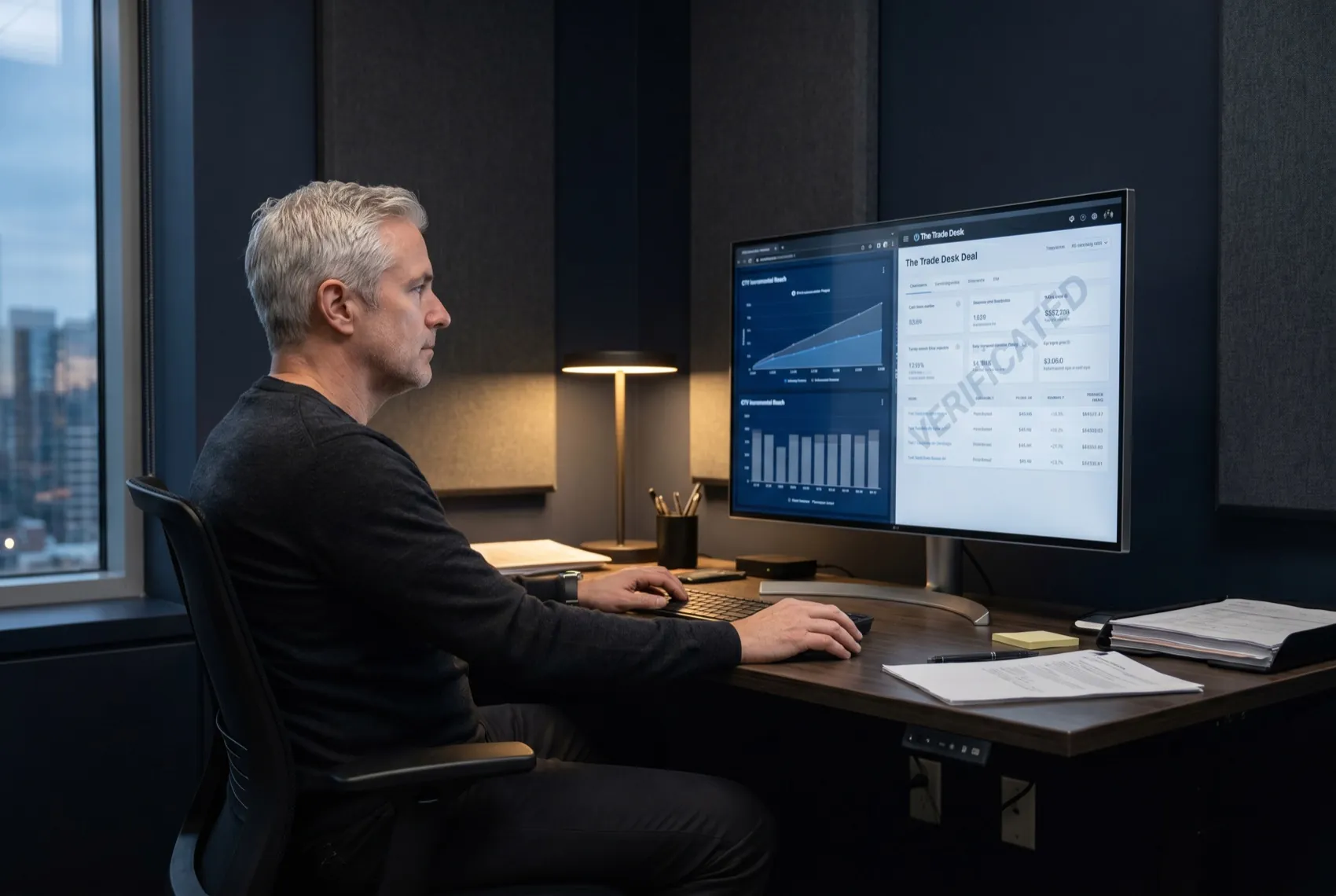
All the major paid channels, chosen by where your buyers convert rather than by what is fashionable. Paid search on Google Ads and Microsoft Advertising, including Smart Bidding and Performance Max. Paid social across Meta with Advantage+ and CAPI, LinkedIn for ABM and demand gen, plus TikTok and X when the brief calls for them. Programmatic and connected TV through DV360 and The Trade Desk with Deal-ID and PMP setups. Shopping and product feeds on Google Shopping, Meta Catalog, and Microsoft, managed through Channable or Feedonomics. Plus retargeting and lifecycle paid coordinated with your owned channels. See how paid social fits at /services/social-media-marketing/.
What does your reporting and measurement cadence look like?
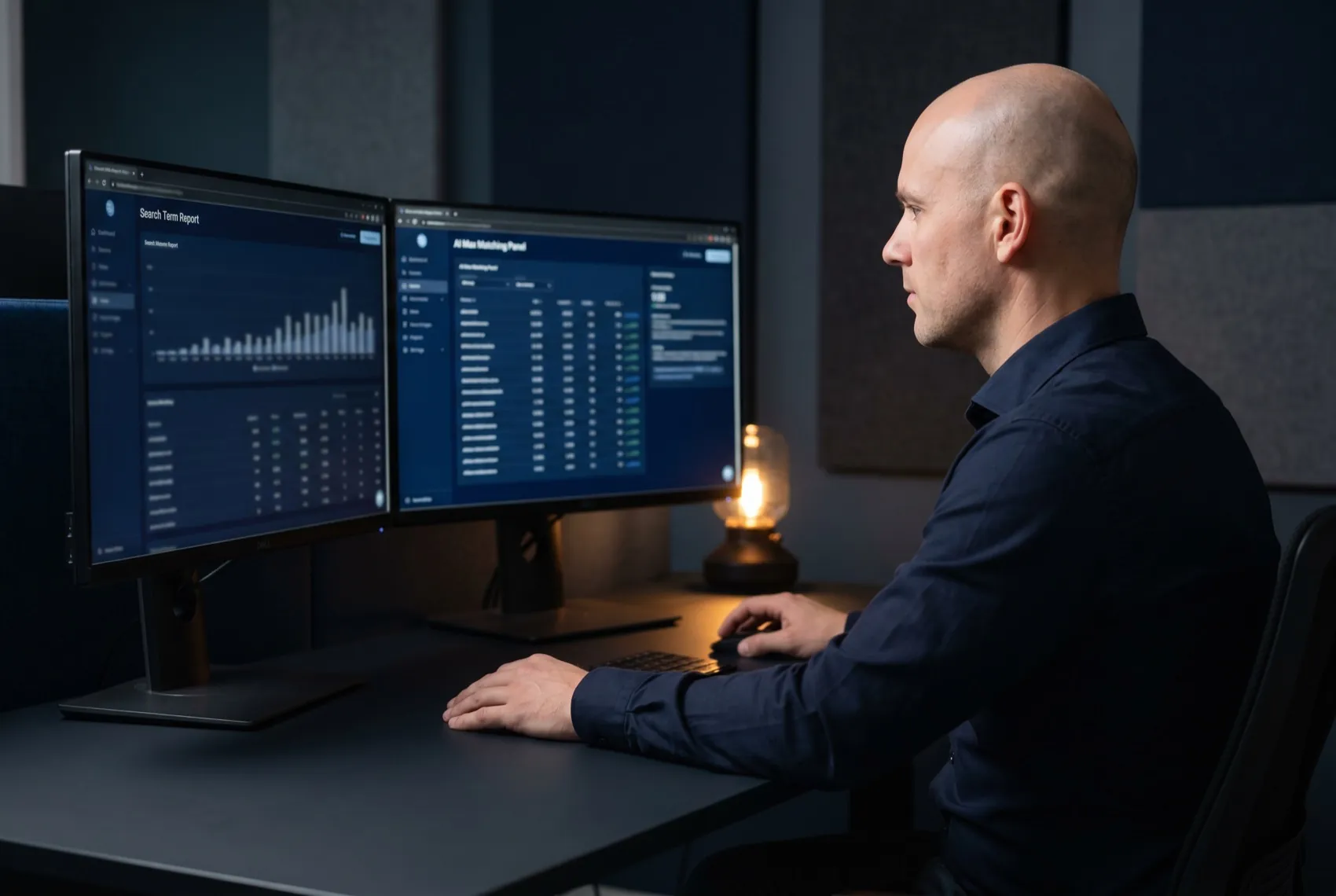
Daily account work, weekly bid and creative iteration, a monthly business review, and a quarterly strategy session. The reporting itself resolves to one consolidated dashboard. It shows CAC, blended ROAS, and platform-by-platform marginal ROAS, so you can see which dollar is working hardest at the margin. During an audit or rebuild you get findings in week two rather than at the end. We instrument accounts so every dollar traces to a converted customer or a documented learning, and the senior strategist named in your contract is the person presenting the numbers each month.
How does PPC fit with your other marketing services?
Paid rarely performs in isolation, so we run it next to the rest of the marketing stack. PPC coordinates with /services/social-media-marketing/ so paid and organic social share creative and audience signals, with /services/content-marketing/ so your landing pages and offers are built to convert the traffic you are buying, and with the broader /services/digital-marketing/ program so SEO, email, and lifecycle do not compete with paid for the same conversions. Retargeting is sequenced against owned channels so you never pay to reach a customer already converted. If you want one accountable partner across the whole funnel, the full picture lives at /services/.